
Packing and preparation guide
Moving and Packing Tips
Learn how to sort, pack, label and prepare household belongings. For a week-by-week timeline, use the Moving Checklist; choose professional help for items that need specialist preparation.
Jump to: Organizing before you pack · Materials and labeling · Packing room by room · Dishes, glasses, and fragile belongings · Furniture, electronics, and specialty items · Items needing advance instructions from the team
Organizing before you pack.
- Sort clothing, books and stored belongings into what you will move, sell, donate or recycle. Keep valuable collections separate for an individual assessment.
- Set aside passports, personal records, jewelry, essential medication, chargers and children’s favorite items so they do not disappear into the shipment.
- Identify anything that will need storage before delivery. Keep the contents you will need first accessible.
- Check which electrical goods will suit your new home. For an international move, review destination compatibility and requirements before shipping appliances or vehicles.
- Keep a separate list for address changes, utilities, subscriptions and travel arrangements. Follow the checklist timeline rather than mixing those tasks into every packing session.
Materials and labeling.
Use clean, strong corrugated cartons with secure closures. Reject reused boxes that are damp, weak or contaminated. Specialty cartons can suit clothing, dishes, mirrors and other items; Humboldt offers packing materials, with local availability to be confirmed.
- Gather clean packing paper, tissue or suitable cushioning, packing tape, labels and markers. Newspaper ink can transfer to belongings; avoid direct contact with delicate surfaces.
- Use small cartons for dense items such as books. Do not fill a large box simply because space remains: the carton and the person handling it must be able to manage the load safely.
- Secure carton bottoms with packing tape. Place heavier items below lighter ones and cushion gaps so contents do not shift.
- Label each carton with its destination room and a number. Keep a simple inventory of carton numbers, contents and anything needing particular care.
- Keep small removable hardware in a labeled bag associated with the item. Avoid taping bags or labels directly onto delicate finishes.
Packing room by room.
Work through one room at a time, starting with things you seldom use. Keep a small area clear for wrapping and labeling; finish each carton before starting the next.
Bedrooms and living areas
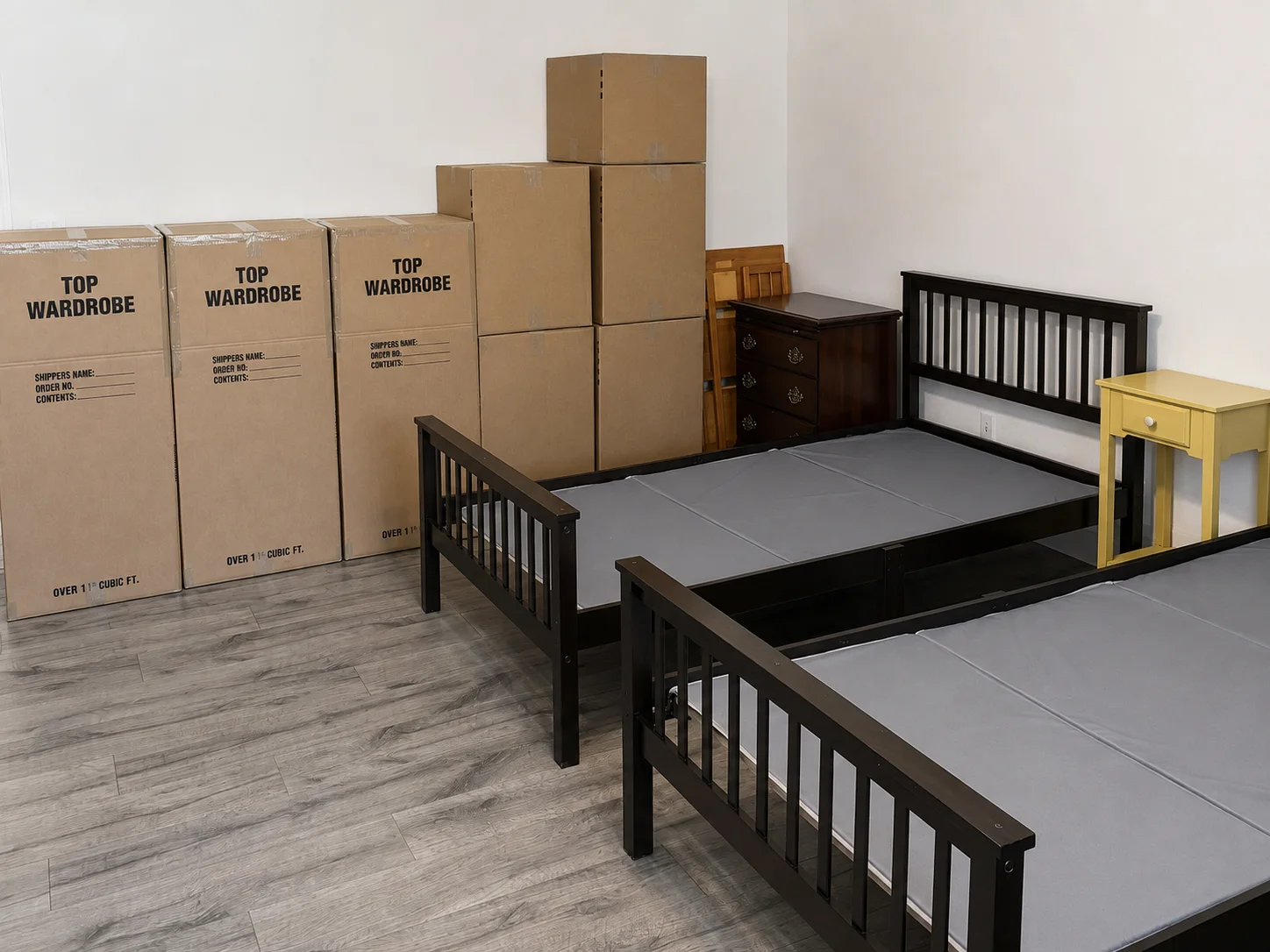
- Use wardrobe cartons for hanging clothing or fold clothes into suitable cartons. Do not overload furniture drawers; remove valuables, breakables and items that could leak.
- Fold curtains after removing them from rods, or use an appropriate hanging carton. Keep bedding clean and separate from tools or liquids.
- If rugs need cleaning, allow them to dry fully before wrapping. Identify large or delicate rugs for the packing team.
- Pack children’s less-used toys first and keep a few familiar favorites with you for the journey.
Kitchen and food
- Use up food that will not travel. Review perishables and frozen food before moving day; do not assume a moving shipment provides temperature-controlled transport.
- Pack accepted nonperishable foods upright in small cartons, cushioning glass containers separately. Keep the weight manageable instead of working to a fixed number of cans.
- Set aside basic utensils and simple meals for the period when the kitchen is packed.
Dishes, glasses, and fragile belongings.
Plates and dishes
- Line a sturdy carton or dish-pack with crumpled packing paper. Use a clear work surface with enough paper to wrap each piece.
- Cover each plate with paper before adding another. If bundling everyday dishes, keep paper between them and wrap the bundle again; wrap delicate or antique pieces individually.
- Place protected plates on edge, not in an unpadded flat stack. Cushion the sides, gaps and top without forcing the contents together.
- Close the carton securely and mark it fragile, with the destination room.
Cups, glasses and stemware
- Wrap cups individually, protecting handles rather than allowing them to press against another piece.
- Cushion the inside of glasses with suitable clean paper, then wrap the outside. Protect stems and bases carefully; dividers can help separate individual pieces.
- Keep delicate glassware upright with cushioning between pieces. Do not place heavy dishes on top of it.
- For fragile mixing bowls, protect each piece and separate any nested pieces with cushioning. Avoid tightly wedging pieces together.
Silver, pictures and lamps
- Wrap silverware in soft cloth or appropriate low-sulfur paper. Pad a silverware chest to protect its exterior.
- Wrap small pictures and mirrors individually and place them on edge in suitable cartons. Keep newspaper off artwork. Large mirrors, valuable paintings and unusual frames may need specialty cartons or crating; do not apply tape across the artwork or mirror surface.
- Remove lamp bulbs, shades and removable fittings when appropriate. Wrap bases and fittings separately, label them and protect shades in clean tissue-lined cartons without heavy items above them.
Furniture, electronics, and specialty items.
Furniture and clocks
Identify heavy furniture and any disassembly before moving day. Keep routes clear and leave heavy or awkward lifting to people with the right equipment and help. Grandfather clocks and other delicate mechanisms may need specialist preparation; agree who will secure or remove components.
Electronics
Use original fitted packaging when available, or suitable cartons and protective cushioning. Photograph cable connections, label cords and keep accessories together. Back up important data and follow the manufacturer’s transport instructions. Keep loose components from rubbing against screens or delicate surfaces.
Appliances and waterbeds
Agree who handles disconnection, preparation and reassembly. Follow model-specific instructions for refrigerators, freezers, washing machines and waterbed mattresses. Do not assume the moving service includes utility disconnection or use a generic folding procedure for every waterbed.
Tools, artwork and unusual belongings
Pack accepted hand tools in small, sound cartons with sharp edges protected. Pianos, safes, artwork and other unusually heavy or valuable belongings need an individual handling assessment. Humboldt’s packing services include options for specialty preparation and custom crating; the agreed scope determines what is included.
Items needing advance instructions from the team.
Fuel, propane, chemicals and powered equipment
Identify these items before packing: fuel-powered tools, propane cylinders, paints, solvents, pesticides, batteries and other potentially hazardous products. Do not pack them unnoticed or drain fuel, vent a cylinder or disconnect equipment based on a general moving checklist. Obtain item-specific transport and preparation instructions.
If products need disposal, follow their labels and your local hazardous-waste program’s instructions. Do not mix chemicals or pour them down a drain or onto the ground. Empty containers can still contain hazardous residue. See EPA’s household hazardous-waste guidance.
Medication, plants and food
Keep medication you need during travel with you and follow its labeled storage conditions. Ask a pharmacist about temperature-sensitive medicines. Review plants and perishable food for route and destination restrictions before packing; acceptance depends on the shipment and its arrangements.
Firearms, ammunition and vehicles
Raise these items separately before booking transport. Acceptance, documentation and preparation depend on the item, carrier and applicable laws. Do not pack ammunition into household cartons or assume a vehicle travels in the household trailer. Vehicle preparation should follow the actual transport provider’s instructions, not a universal fuel level or battery-disconnection rule.